Dairy Queen Menu Nutrition: What You Need to Know Before Ordering
When you’re craving a sweet treat or a quick meal, Dairy Queen is a popular destination. However, it’s essential to be aware of the nutritional content of their offerings to make informed choices.
Being mindful of your dietary needs is crucial when enjoying your meal or dessert at Dairy Queen. This article will provide an in-depth look at the nutritional content of their menu items, helping you navigate their offerings.
Key Takeaways
- Understand the nutritional content of Dairy Queen’s menu items
- Make informed choices to suit your dietary needs
- Learn how to navigate Dairy Queen’s offerings
- Discover the nutritional facts behind your favorite Dairy Queen treats
- Enjoy your meal or dessert while being mindful of your health
The Sweet Truth About Fast Food Desserts
Indulging in fast food desserts can be a tempting treat, but understanding their nutritional impact is crucial. At Dairy Queen, desserts are a significant part of their menu, attracting customers with their sweet and creamy offerings.
Why Nutritional Awareness Matters
Being aware of the nutritional content of Dairy Queen desserts helps you make informed choices. For instance, a M&M’s Blizzard can range from 390 to 740 calories, depending on the size. Knowing this can help you decide whether to opt for a smaller size or choose a different dessert.
Balancing Indulgence and Health
Balancing the desire for sweet treats with health considerations is key. Dairy Queen offers some healthier options, such as the Grilled Chicken Sandwich or side salads, but their desserts remain a popular choice. By being mindful of dairy queen calories, you can enjoy their desserts in moderation.
| Dessert | Calories |
|---|---|
| M&M’s Blizzard (Medium) | 640 |
| Chocolate Sundae | 340 |
Dairy Queen Menu Nutrition: A Complete Overview
Dairy Queen’s diverse menu offers something for everyone, but understanding the nutritional content is key to making informed choices. From ice cream treats to burgers and sandwiches, the nutritional value of Dairy Queen menu items can vary significantly.
To make healthier choices, it’s crucial to understand the calorie ranges across different menu categories. Dairy Queen’s menu is divided into several categories, including frozen treats, burgers, sandwiches, and sides.
Calorie Ranges Across Menu Categories
Dairy Queen’s menu items span a wide range of calorie counts. For instance, a small vanilla cone can be under 200 calories, while a large Blizzard treat can exceed 1,000 calories. Burgers and sandwiches also vary, with some options being relatively low in calories and others being much higher.
| Menu Category | Lowest Calorie Option | Highest Calorie Option |
|---|---|---|
| Frozen Treats | Small Vanilla Cone (170 calories) | Large M&M’s Blizzard (1,020 calories) |
| Burgers & Sandwiches | Grilled Chicken Sandwich (340 calories) | Bacon Cheeseburger (740 calories) |
Common Nutritional Concerns at DQ
Some common nutritional concerns at Dairy Queen include high sugar content in their frozen treats and high sodium levels in some of their burgers and sandwiches. Being mindful of these factors can help you make healthier choices.
Blizzard Treats: Nutritional Breakdown
When it comes to indulging in a Blizzard at Dairy Queen, understanding the nutritional facts can help you make informed choices. Dairy Queen’s Blizzard treats are a staple on their menu, offering a variety of flavors that can be customized with different mix-ins.
Classic Blizzard Nutrition Facts
Classic Blizzards at Dairy Queen come in a range of flavors, each with its own nutritional profile. On average, a regular-sized Classic Blizzard can range from 570 to 840 calories, with fat content varying between 23g to 34g.
| Flavor | Calories | Fat (g) |
|---|---|---|
| M&M’s | 740 | 28 |
| Reese’s | 750 | 31 |
| Chocolate Chip Cookie Dough | 840 | 34 |
Signature Blizzard Nutrition Facts
Dairy Queen’s Signature Blizzards offer even more variety, with unique flavor combinations. Nutritionally, they can be similar to the Classic Blizzards, but some may have higher calorie and fat counts due to additional mix-ins.
Healthier Blizzard Options
For those looking to indulge more mindfully, Dairy Queen offers several options to make your Blizzard treat healthier.
Mini Size Benefits
Opting for a mini Blizzard can significantly reduce calorie intake, with sizes ranging from 310 to 470 calories. This is a great way to satisfy your craving without overdoing it.
Lower-Calorie Mix-ins
Choosing lower-calorie mix-ins, such as fruit or nuts, can also help make your Blizzard healthier. Dairy Queen provides a variety of mix-in options, allowing you to customize your treat to fit your dietary preferences.
Ice Cream Cones and Sundaes: Calorie Comparison
Ice cream cones and sundaes are Dairy Queen staples, but their nutritional content can vary significantly. Understanding these differences can help you make informed choices when ordering.
Cone Options and Their Nutritional Differences
Dairy Queen offers various cone options, each with its own nutritional profile. The differences lie in the type of cone and the size.
Dipped vs. Regular Cones
Dipped cones have an additional layer of chocolate, which increases the calorie count. For example, a dipped cone can have up to 50% more calories than a regular cone.
Size Impact on Nutrition
The size of the cone also plays a significant role in its nutritional content. Larger cones naturally have more calories. Here are some key differences:
- Small cones: approximately 150-200 calories
- Medium cones: around 250-350 calories
- Large cones: can exceed 500 calories
Sundae Nutrition: From Classic to Deluxe
Sundaes at Dairy Queen range from classic to deluxe, with varying nutritional content. The classic sundaes are relatively simpler, while deluxe sundaes come with additional toppings.
Some key nutritional differences include:
- Classic sundaes: around 200-300 calories
- Deluxe sundaes: can range from 400 to over 600 calories, depending on the toppings
DQ Frozen Cakes and Novelties: What’s Inside
Dairy Queen’s frozen treats are a staple for many, but have you ever wondered what’s inside these delicious desserts? Understanding the nutritional content of their frozen cakes and novelties can help you make informed choices.
Nutritional Profile of DQ Cakes
Dairy Queen cakes are a popular choice for celebrations. A typical slice of DQ cake can range from 300 to 500 calories, depending on the flavor and size. The fat content is significant, with some slices containing up to 20 grams of fat. Additionally, these cakes are high in sugar, with some servings containing over 40 grams.
Dilly Bars and Other Novelties: Nutrition Facts
Dilly Bars are a classic Dairy Queen treat. A single Dilly Bar contains around 170 calories, with 8 grams of fat and 22 grams of sugar. Other novelties, like ice cream sandwiches, have similar nutritional profiles.
Portion-Controlled Treats
One of the benefits of Dairy Queen’s novelties is their portion-controlled sizes. This can help with managing calorie intake.
Comparing Fat and Sugar Content
Let’s compare the fat and sugar content of some popular Dairy Queen novelties:
| Treat | Calories | Fat (g) | Sugar (g) |
|---|---|---|---|
| Dilly Bar | 170 | 8 | 22 |
| Ice Cream Sandwich | 190 | 9 | 25 |
| Frozen Cake Slice | 400 | 20 | 40 |
Burgers and Sandwiches: Calorie Counts and Nutrition
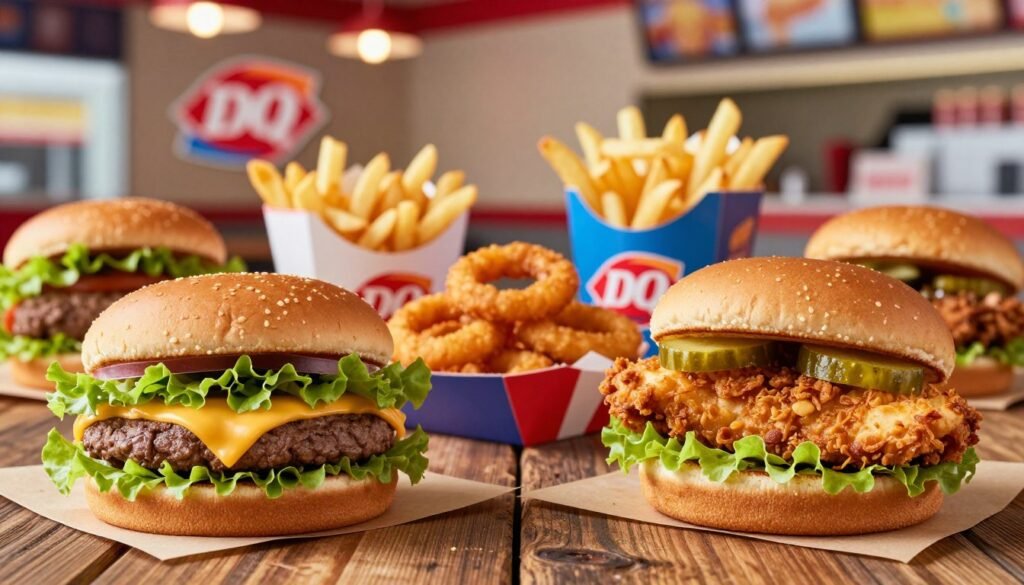
For many, a trip to Dairy Queen isn’t complete without ordering a burger or sandwich, but it’s worth taking a closer look at the nutrition facts behind these menu items. Dairy Queen offers a variety of burgers and sandwiches that can satisfy different tastes and dietary preferences.
Signature Stackburgers Nutritional Information
Dairy Queen’s signature Stackburgers are a fan favorite, but their nutritional content can vary significantly based on the specific ingredients and toppings. A classic Stackburger typically contains around 740 calories, with 42g of fat and 1040mg of sodium. Understanding these numbers can help you make more informed choices.
Chicken Sandwiches: Nutritional Comparison
Chicken sandwiches at Dairy Queen offer an alternative to beef, but how do they compare nutritionally? A grilled chicken sandwich generally has fewer calories (around 340) compared to a crispy chicken sandwich (around 520 calories). However, both options have their own set of nutritional pros and cons, including differences in fat, sodium, and protein content.
Reducing Calories in Your Burger Order
There are several strategies for making your Dairy Queen burger order healthier. Customization is key, and being mindful of condiments can also save calories.
Customization Options
By customizing your burger, you can significantly reduce its calorie count. Options include choosing a smaller patty, opting for a lettuce wrap instead of a traditional bun, and loading up on vegetables.
Condiment Calorie Savings
Condiments can add up quickly in terms of calories. Choosing low-calorie or reduced-sugar options, or simply using less of them, can make a big difference. For example, swapping out regular mayo for a lighter version can save around 90 calories per tablespoon.
By being aware of the nutritional content of Dairy Queen’s burgers and sandwiches and making a few simple adjustments, you can enjoy your meal while keeping your dietary goals in check.
Basket Meals: Understanding the Nutritional Impact
Dairy Queen’s basket meals are a go-to for many, but understanding their nutritional value can make a significant difference in your dining experience. These meals are designed to be filling and satisfying, but they can also be high in calories, fat, and sodium.
Chicken Strip Baskets: Nutrition Facts
A typical Chicken Strip Basket at Dairy Queen includes crispy chicken strips, fries, and a drink. The nutritional content can vary based on the size and specific ingredients, but a standard basket can range from 1,200 to 1,500 calories, with a significant portion coming from fat and sodium.
| Nutrient | Amount per serving |
|---|---|
| Calories | 1,350 |
| Fat (g) | 70 |
| Sodium (mg) | 2,500 |
Healthier Alternatives to Traditional Baskets
For those looking to make healthier choices, Dairy Queen offers alternatives that can reduce the nutritional impact of their basket meals.
Grilled vs. Fried Options
Opting for grilled chicken instead of fried can significantly reduce the calorie and fat content of your meal. Grilled chicken strips are a leaner protein option compared to their fried counterparts.
“Choosing grilled over fried can make a meal significantly healthier.”
Side Substitutions
Another way to make your basket meal healthier is by substituting sides. For example, choosing a side salad or fruit instead of fries can reduce calories and increase nutrient intake.
By being mindful of these options, you can enjoy Dairy Queen’s basket meals while making more informed, healthier choices.
Sides and Snacks: From Fries to Onion Rings
When dining at Dairy Queen, understanding the nutritional content of sides and snacks can help you make informed choices. These items can add variety and flavor to your meal, but their nutritional profiles differ significantly.
French Fries and Onion Rings: Nutritional Comparison
French fries and onion rings are popular sides at Dairy Queen, but they have distinct nutritional profiles. French fries are higher in calories and fat, while onion rings have more sodium due to their breading.
| Nutritional Information | French Fries | Onion Rings |
|---|---|---|
| Calories | 340 | 300 |
| Fat (g) | 16 | 14 |
| Sodium (mg) | 520 | 740 |
Cheese Curds and Pretzel Sticks: Calorie Breakdown
Cheese curds and pretzel sticks are other snack options available. Cheese curds are typically higher in calories and fat due to their cheese content, while pretzel sticks are lower in calories but may contain more sodium.
By comparing these options, you can choose snacks that fit your dietary needs and preferences.
Beverages and Shakes: Hidden Calories
Beverages and shakes at Dairy Queen can be surprisingly high in calories. While it’s common to focus on the nutritional content of meals, drinks can often be overlooked, leading to unintended calorie consumption.
Milkshake Nutrition Facts
Dairy Queen’s milkshakes are a beloved treat, but their nutritional content can vary significantly. Understanding the differences between classic and premium shakes can help you make more informed choices.
Classic Flavors Compared
Classic flavors like vanilla and chocolate have distinct nutritional profiles. For instance, a small vanilla milkshake contains approximately 340 calories, while a chocolate version has around 390 calories.
Premium Shake Nutrition
Premium shakes, with added ingredients like M&M’s or Reese’s Pieces, can increase calorie counts substantially. A small M&M’s milkshake, for example, can contain over 570 calories.
Lower-Calorie Drink Options at Dairy Queen
For those watching their calorie intake, Dairy Queen offers several lower-calorie drink options. These include:
- Soft drinks like Coca-Cola and Diet Coke
- Iced tea and coffee
- Water and flavored water options
| Drink | Calories |
|---|---|
| Coca-Cola (Small) | 140 |
| Diet Coke (Small) | 0 |
| Iced Tea (Small) | 60 |
By choosing these options, you can enjoy your visit to Dairy Queen while keeping your calorie intake in check.
Healthier Choices at Dairy Queen
Making healthier choices at Dairy Queen is easier than you think. With a few mindful decisions, you can enjoy your favorite treats without derailing your health goals.
Lower-Calorie Menu Items
Dairy Queen offers several lower-calorie options that can satisfy your cravings. For instance, their Grilled Chicken Sandwich is a lean protein option with fewer calories than many of their burgers. Additionally, opting for a Small Size of their menu items can significantly reduce calorie intake.
Strategies for Healthier Ordering
To make healthier choices, consider customizing your order. For example, you can ask for no sauce or cheese on your burgers and sandwiches to cut down on extra calories. Choosing a salad with grilled chicken instead of fried chicken is another healthier option.
Portion Control Tips
Controlling portion sizes is key to maintaining a healthy diet. Dairy Queen’s Kids’ Meals can be a great way to control portions, as they come with smaller servings. Another strategy is to share desserts, which not only reduces calorie intake but also saves money.
Kids’ Menu Advantages
The Kids’ Menu at Dairy Queen offers smaller portions that are perfect for both kids and adults looking to control their intake. These meals are designed to be satisfying without being overly filling.
Sharing Desserts
Sharing desserts is a fun way to enjoy Dairy Queen’s sweet treats while keeping calories in check. Whether it’s a Blizzard or a sundae, splitting it with someone can make it a more guilt-free experience.
Special Dietary Considerations at Dairy Queen
For those with specific dietary requirements, Dairy Queen offers several considerations to make dining easier and safer. Understanding the nutritional content and potential allergens in their menu items is crucial.
Options for Those Watching Sodium and Sugar
Dairy Queen provides nutritional information that can help individuals watching their sodium and sugar intake make informed choices. Lower-sugar and reduced-sodium options are available across various menu categories, including Blizzard treats and burgers.
Allergen Information and Gluten-Sensitive Choices
Dairy Queen takes allergen information seriously, providing details on common allergens in their products. This includes information on gluten, nuts, and dairy.
Common Allergens in DQ Products
Common allergens present in Dairy Queen products include gluten, milk, soy, and nuts. It’s essential to check the nutritional information for specific menu items.
Cross-Contamination Concerns
There’s a risk of cross-contamination with allergens in any food service environment. Dairy Queen advises customers with severe allergies to inform staff to minimize risks.
Conclusion: Enjoying Dairy Queen Mindfully
Dairy Queen offers a variety of treats that can be part of a balanced diet when consumed mindfully. By understanding the dairy queen menu nutrition, you can make informed choices that satisfy your cravings without compromising your health goals.
To enjoy Dairy Queen mindfully, consider opting for dairy queen healthy options such as smaller portions or lower-calorie menu items. This approach allows you to indulge in your favorite treats while maintaining a balanced diet.
Being aware of the nutritional content of your Dairy Queen choices is key to making informed decisions. By applying the insights gained from this article, you can navigate the menu with confidence and enjoy your favorite Dairy Queen treats in a healthier way.